
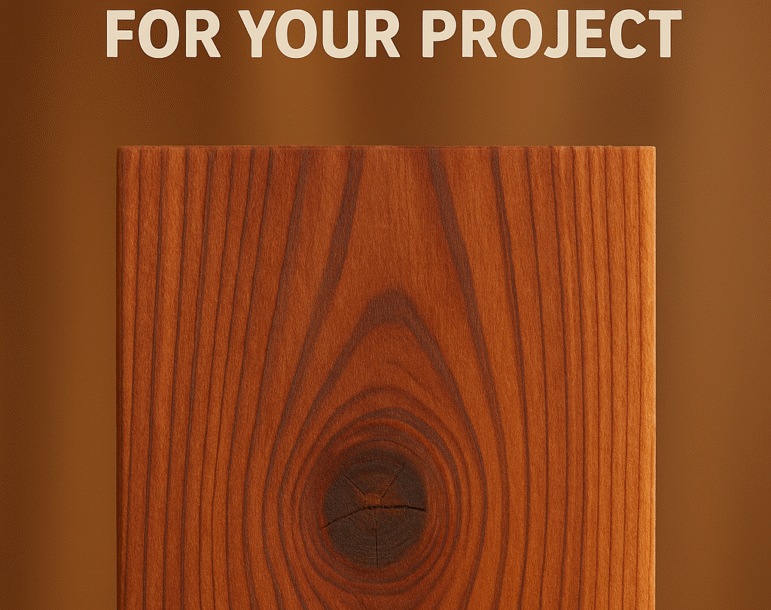
When it comes to cedar wood for projects, two popular options are Eastern Red Cedar and Western Red Cedar. Both are coniferous softwoods (in the cypress family) known for their pleasant aroma and natural durability. However, they differ in appearance, hardness, workability, and typical uses. In this friendly yet informative guide, we’ll compare Eastern and Western Red Cedar in detail – covering everything from wood color and grain to rot resistance, hardness (Janka ratings), common applications (like cedar siding, furniture, or closet linings), aroma, workability, cost, and more. By the end, you’ll understand the strengths of each cedar and get guidance on choosing the right one for your project.
Classification and Botanical Background
Eastern Red Cedar (Juniperus virginiana) and Western Red Cedar (Thuja plicata) are often called “cedar” but are not true cedars (genus Cedrus). Instead, both belong to the cypress family (Cupressaceae) and are evergreen softwood trees. Eastern Red Cedar is actually a type of juniper native to the Eastern and Central United States, while Western Red Cedar (sometimes called giant arborvitae) is native to the Pacific Northwest. Despite different habitats and botanical genus, both yield fragrant, rot-resistant softwood lumber prized in woodworking and construction. In summary:
- Eastern Red Cedar – Juniper family; grows throughout the eastern U.S. (often smaller, slow-growing trees). Commonly referred to as aromatic cedar for its strong scent.
- Western Red Cedar – Arborvitae family; grows in the moist Pacific Northwest and Rocky Mountains (very large trees up to 200′). Renowned for outdoor use due to its size and decay resistance.
Both woods are lightweight and easy to work, with natural oils that provide decay/insect resistance and that signature “cedar” aroma. Next, let’s compare how they look.
Appearance: Color and Grain Differences
Color: Eastern and Western Red Cedar have distinct appearances. Eastern Red Cedar heartwood is usually a vibrant reddish or violet-brown with pale yellow-white sapwood streaks running through it. This creates a striking contrast – for example, aromatic cedar closet planks often show bold red-purple tones with creamy white edges. In fact, a piece of Eastern Red Cedar can have purplish-red heartwood with light sapwood stripes, giving it a very colorful, variegated look. Western Red Cedar, on the other hand, tends to have a more uniform color. Its heartwood is a consistent reddish-brown to pinkish-brown tone, sometimes with darker streaks, and the narrow sapwood is pale yellowish white (often cut away in lumber). Western cedar boards usually appear light brown or amber with subtle pink hues, especially in “clear” (knot-free) grades.
Grain and Texture: The grain of both woods is generally straight, but their texture differs. Eastern Red Cedar has a fine, even texture; however, because the trees are small, knots are common in the lumber. These tight knots give Eastern cedar a rustic character. In contrast, Western Red Cedar has a slightly coarser texture and tends to have fewer knots in higher grades (large logs yield clear lumber). Lower-grade Western cedar will have knots, but you can source clear, vertical-grain boards for a smooth, uniform look. Overall, Eastern Red Cedar often displays a denser, knotty appearance full of character, while Western Red Cedar offers a smoother, more uniform look especially when using clear-grade boards.
Aging and Aesthetics: Both cedars are beautiful when fresh – Eastern cedar’s red heartwood can darken to a richer brown-red over time, and Western cedar’s brownish-red tones will gradually weather to a silvery gray if left untreated outdoors. Homeowners often choose Western Red Cedar for visible cedar siding or decking when they want a consistent, warm wood tone, whereas Eastern Red Cedar’s dramatic two-tone look is prized for interior accents like paneling or hope chests. Either way, both woods bring natural warmth and that cedar look to a project’s aesthetics.
Durability and Rot Resistance
One reason cedar siding and outdoor structures are so popular is cedar wood’s natural durability. Both Eastern and Western Red Cedar are highly resistant to rot and decay without needing chemical treatment, thanks to protective oils in the wood. Western Red Cedar is rated “durable to very durable” in decay resistance. This means it can withstand years of outdoor exposure, making it ideal for shingles, siding, decks, and other outdoor uses. Western Red Cedar heartwood contains compounds (like thujaplicin) that repel moisture and fungi, so it stands up to wet climates exceptionally well. It’s no surprise that Western Red Cedar “reigns supreme” for exterior applications in the building industry. For example, cedar shingles and clapboard siding made of Western Red Cedar can last for decades in the elements.
Eastern Red Cedar is also naturally rot-resistant – in fact, it’s considered excellent in resistance to decay. Farmers and homesteaders have long used untreated Eastern Red Cedar fence posts stuck directly in the ground because they resist rot for many years. The heartwood contains aromatic cedar oils (like cedarwood oil) that inhibit decay and also deter insects (more on insects shortly). While Eastern Red Cedar isn’t used as widely for large-scale siding or roofing, it certainly holds up in outdoor settings such as furniture, fence rails, or raised garden beds. Its ability to tolerate weather extremes (drought, heat, cold) is well noted, making it a hardy choice for outdoor wood in many regions.
Insect Resistance: Both cedars have some natural pest-repellent properties, but with slight differences. Eastern Red Cedar’s strong aroma is famous for repelling moths, and its heartwood is toxic to many insects – for example, tests show Eastern cedar heartwood can even kill a large percentage of termites that try to eat it. It is regarded as excellent against insect attack, which is why people use Eastern Red Cedar to line closets (to keep moths out of wool clothes). Western Red Cedar also contains natural phenols that discourage insects, but it is not completely immune – it has a mixed resistance to insect attack. Certain pests (like some types of beetles or termites) may still nibble on Western cedar if conditions allow. In practical terms, Western Red Cedar boards in a house structure are far less likely to get insect damage than, say, pine boards, but Eastern Red Cedar’s oils tend to be more overtly repellent (hence its use in chests and sachets). Both woods resist mildew and rot better than most other native woods, contributing to their durability outdoors.
Summary: When it comes to raw longevity against rot, Western Red Cedar might have a slight edge for constant outdoor exposure, as it’s often the top choice for cedar siding and roofing due to its decay resistance and water-repellent nature. But Eastern Red Cedar is no slouch – it can also last outdoors a long time (especially the heartwood), and it adds superior insect repellency. Either wood will outlast most untreated lumber in outdoor conditions thanks to those natural preservatives. Next, let’s look at how they compare in hardness and strength.
Hardness and Strength (Janka Hardness)
Despite both being “softwoods,” Eastern and Western Red Cedar differ significantly in hardness. The Janka hardness test measures how resistant a wood is to denting. On this scale, Eastern Red Cedar is considerably harder than Western Red Cedar. Eastern Red Cedar has a Janka hardness around 900 pounds-force (lbf). In contrast, Western Red Cedar’s Janka hardness is only about 350 lbf, which is very low.
To put that in perspective, Eastern Red Cedar (900 lbf) is roughly on par with black cherry or black walnut in hardness, whereas Western Red Cedar (350 lbf) is one of the softest woods used in construction – much softer than Douglas-fir or Southern pine, and only a bit harder than white pine. In practical terms, Western Red Cedar dents and scratches quite easily because of its low hardness. If you were to use it for a tabletop or flooring, it would show dings from dropped objects or pet claws readily. Eastern Red Cedar is harder, so it will hold up better to wear – for example, an Eastern Red Cedar bench or chest will resist dents more than an equivalent made of Western Cedar.
However, absolute hardness isn’t crucial for all applications. For siding, paneling, or shingles, Western Red Cedar’s softness isn’t a big issue (those surfaces aren’t getting foot traffic or heavy impacts). And Western Cedar’s softness has an upside: it’s very lightweight and easy to saw or nail. Eastern Red Cedar’s higher hardness means it’s a bit more brittle when cut (it can splinter if tools are dull), but it still works easily compared to any hardwood. Both cedars have relatively low strength in structural terms – you wouldn’t use either for load-bearing beams in a house frame, for example. They are chosen for their other qualities (rot resistance, appearance, aroma) rather than sheer strength.
In summary, if your project benefits from a bit more hardness (say a cedar closet floor or a decorative piece that might get bumped), Eastern Red Cedar’s ~900 lbf hardness is a plus. If softness and lightweight wood is actually an advantage (ease of handling, lower shipping weight, etc.), Western Red Cedar’s ~350 lbf hardness fits the bill. Next, we’ll compare the famed aroma of these cedars and how that ties into insect repellent properties.
Aroma and Insect-Repelling Properties
One of the joys of cedar wood is its aromatic fragrance. Both Eastern and Western Red Cedar have distinct scents, but Eastern Red Cedar’s aroma is far stronger and more lingering. Eastern Red Cedar (aromatic cedar) contains volatile oils that give off that classic “cedar closet” smell – a pungent, sweet, woody scent that can perfume a space for decades. This aroma isn’t just for our noses; it actively repels moths and other insects, protecting fabrics from infestations. That’s why cedar chests and closet linings made of Eastern Red Cedar are traditional for storing clothes and linens. The wood is often left unfinished inside closets specifically to maximize the aroma and its moth-repellent effect.
Western Red Cedar also has a pleasant smell, described as a milder, sweet cedar aroma. You’ll notice a strong whiff of cedar when cutting or sanding Western Red Cedar, and many people find the scent therapeutic (it’s a popular choice for saunas due to its aroma and resistance to decay). However, Western Cedar’s smell is less potent and long-lasting compared to Eastern’s. After installation, Western Red Cedar lumber will still have a faint cedar scent (especially if it’s a humid day or if the wood is freshly exposed), but it won’t perfume a room as intensely as Eastern Red Cedar does.
Insect repellence: Both species owe their insect resistance to these aromatic oils. Eastern Red Cedar’s oil (sometimes distilled into “cedar oil”) is proven to repel or kill pests like moths, cockroaches, and even termites. Western Red Cedar’s wood contains plicatic acid and other compounds that deter insects and resist decay, but as mentioned, it’s not foolproof for all bugs. Still, cedar mulch from either species is often recommended in landscaping as a natural pest-reducing mulch. In the context of woodworking, if you want to maximize insect repellent qualities (e.g. making cedar sachets, pet bedding, or closet accessories), Eastern Red Cedar is the top choice for its potency. Western Red Cedar will still offer some natural resistance to insects and certainly won’t attract them, but it’s chosen more for outdoor construction where its decay resistance is key, rather than for indoor bug control.
Allergies caution: A brief note – the very compounds that make cedar aromatic can cause sensitivity in some people. Western Red Cedar dust, in particular, is known to trigger allergic respiratory reactions in some woodworkers. Eastern Red Cedar is a bit less notorious on this front, but it too can irritate some individuals (always use dust protection when sanding any cedar). For most folks, though, the smell of cedar is a delight and one of the reasons to use these woods.
Workability, Density, and Finishing
Both Eastern and Western Red Cedar are user-friendly woods for woodworkers and contractors, but there are nuances in how they handle.
Weight and Density: Western Red Cedar is extremely light. Its average dried weight is about 23 lbs/ft³, which is why pieces of Western Cedar feel almost featherlight for their size. Eastern Red Cedar is a bit denser at around 33 lbs/ft³ – still lightweight compared to oak or maple, but noticeably heavier and sturdier than Western Cedar. This difference in density ties to the hardness difference we discussed. For example, an 8-foot Western Red Cedar board is easy to carry on your shoulder; an Eastern Red Cedar board of the same size will be heavier (about 40% heavier by volume). If you’re building something like a long outdoor pergola or fence, the lighter weight of Western Cedar can make handling and installation easier (and puts less strain on structures). Eastern Cedar’s moderate weight, however, can lend a bit more solidity to furniture pieces or small projects where heft is desired.
Cutting and Shaping: Western Red Cedar cuts “like butter.” Carpenters love that it saws and planes with minimal effort and doesn’t dull tools much, because it’s so soft. You can use both hand tools and power tools easily on WRC. The main caution is its softness – power sanding can remove material very quickly, and because the wood has soft earlywood bands and harder latewood bands, you can end up with an uneven surface if you’re not careful when sanding. Also, Western Cedar’s soft surface dents easily; even clamping too hard or dropping a tool on it can compress the wood. Eastern Red Cedar, while still workable, has a few more considerations. It cuts cleanly and generally planes well, but the presence of knots can cause grain deviations that snag or tear out if your blades aren’t sharp. Moreover, Eastern Cedar reportedly has a high silica content, which can dull cutters faster than you’d expect for a softwood. If you’re milling a lot of Eastern Red Cedar (for example, making tongue-and-groove closet boards), carbide blades are recommended to handle the silica without losing their edge. On the plus side, Eastern Cedar’s finer grain can take detail well in carving or turning (you can carve it for small projects, keeping in mind it’s a bit brittle). Western Cedar is less often used for fine carving because its coarse texture can crumble on detailed cuts.
Joining and Fastening: Both cedars glue well and hold paint or stain decently, since they are dimensionally stable woods. They are also resin-free, meaning you don’t get sap oozing out (unlike pine). However, Western Red Cedar in particular has tannins that can react with iron – using standard steel nails or screws can cause dark staining around the fastener over time, especially if moisture is present. The fix is to use stainless steel or coated fasteners for Western Cedar projects (this is standard practice for cedar siding or fencing to avoid black streaks). Eastern Red Cedar doesn’t seem to corrode metals as much, possibly because it’s less tannic, but it’s still wise to use corrosion-resistant fasteners for any outdoor cedar project.
Finishing: The choice to finish or not finish cedar often depends on the application. Western Red Cedar used outdoors is frequently left unfinished so it can weather to a natural gray (many people like that look), or it’s treated with an exterior stain/sealer to preserve its color. Western Cedar accepts paints and stains fairly well – its lack of pitch means finishes adhere uniformly. Indoors, Western Cedar can be clear-coated or oiled for a richer color; just note the wood is soft, so a harder topcoat (polyurethane) can help resist wear. Eastern Red Cedar is unique in that it’s often left unfinished indoors to preserve its aroma. If you line a closet with it, you do not want to apply a film finish, or you’ll lock in the oils and defeat the purpose. If you do need to topcoat Eastern Cedar (say, for a piece of furniture or a decorative panel), know that its natural oils can interfere with certain finishes. Oil-based varnishes may have trouble curing on Eastern Cedar, especially in enclosed areas, because the cedar oils prevent proper drying. The workaround is to use a dewaxed shellac sealer or simply use polyurethane or lacquer, which have been shown to cure well on Eastern Red Cedar. Water-based polys can also work and will have less odor interaction. Always test your finish on a scrap piece of aromatic cedar first.
Planing and Sanding: One more note – tearout. Western Red Cedar, being soft, planes easily but make very light cuts to avoid tearing the grain, especially if there are knots. Eastern Red Cedar’s knots are hard and often surrounded by softer wood, so they can also cause some tearout. Sharp blades and possibly a higher cutting angle can help when planing Eastern Cedar. When sanding Eastern Cedar, the resinous dust is quite fragrant – be sure to wear a dust mask to avoid overwhelming yourself (and to prevent irritation).
Overall, workability is excellent for both cedars. Western Red Cedar might edge out Eastern for ease (due to being softer and the wood coming in clear, large boards), whereas Eastern Red Cedar edges out Western in surface durability (harder and less prone to dings). The best practices – use sharp tools, avoid iron fasteners in Western Cedar, and choose appropriate finishes – will ensure a great result with either wood.
Typical Applications and Uses
Thanks to their properties, Eastern and Western Red Cedar have different traditional uses. Here’s how they commonly stack up:
- Western Red Cedar: This wood is a superstar for exterior applications. You’ll find Western Red Cedar used in siding and cladding, roofing shingles/shakes, exterior trim, and decking. Its combination of light weight, stability, and rot resistance is perfect for these uses – for example, cedar siding and cedar shingles on a home can withstand weather for decades. Western Red Cedar is also popular for fences, pergolas, gazebos, and other outdoor structures, as well as outdoor furniture like Adirondack chairs or picnic tables. Contractors often choose Western Cedar for “outdoor cedar” projects because it’s readily available in long lengths and large dimensions (like 2×8, 2×10 lumber, posts, etc.) and it fares well outdoors. Additionally, Western Red Cedar is used in boat building (small boats, canoes) due to its light weight and rot resistance. Woodworkers prize some top-grade Western Red Cedar for musical instruments – notably, it’s used as a tonewood for guitar soundboards (classical and steel-string guitars) because it’s lightweight and has good acoustic properties. In summary, Western Red Cedar is the go-to for construction lumber where decay resistance is needed and for large-scale applications like cladding and structures. It’s even used for saunas and hot tubs (the wood’s natural oils resist moisture and the aroma enhances the experience).
- Eastern Red Cedar: This wood shines in a mix of indoor and outdoor small-scale uses. The most iconic uses are closet linings and cedar chests – Eastern Red Cedar is the classic wood used to line blanket chests or closet walls because of its aroma and moth-repelling qualities. Many homeowners buy aromatic cedar planks (often tongue-and-groove boards) to install in closets, armoires, or drawers for this reason. Eastern Red Cedar is also commonly used for storage trunks, hope chests, and jewelry boxes – either as the primary wood or as the interior lining. In the outdoors, Eastern Red Cedar’s durability makes it great for fence posts (as mentioned) and it’s often used for landscape mulch and wood chips due to its bug resistance. You’ll also see Eastern Red Cedar used in handcrafted outdoor furniture (rustic log benches, Adirondack chairs in the eastern U.S., etc.) and birdhouses or feeders (it holds up outside and the smell may deter insects from bothering nesting birds). Woodworkers use Eastern Red Cedar for small wooden specialty items: it was historically used to make pencils (the classic pencil wood aroma comes from this cedar), and today it’s popular for crafts, carvings, bow racks, and even archery bows (some traditional longbows are made from Eastern Red Cedar). You can even find cedar balls, rings, and hanger blocks made from Eastern Red Cedar to place in closets for pest control – these are essentially small chunks of the aromatic wood. While Eastern Red Cedar can be milled into boards and used like Western Cedar, its narrower, knotty boards mean it’s less utilized for wide siding or structural lumber. One notable use in some regions: Eastern Red Cedar has been sawn into paneling or small siding shingles on a very limited basis, but it’s not common compared to Western Cedar or Northern White Cedar for that purpose.
To compare succinctly, Western Red Cedar is synonymous with house exteriors (siding, shingles, outdoor structures), whereas Eastern Red Cedar is synonymous with interior cedar (closets, chests) and certain niche outdoor uses (fence posts, rustic items). Both can be used for outdoor cedar furniture and decor – if you have access to Eastern Cedar and love its look, you can certainly build a garden bench or planter from it and expect it to last. If you need large dimensional lumber for a gazebo or long fence panels, Western Cedar will likely be the available choice.
Cost and Availability
Where you live can influence which cedar is more available and cost-effective. Western Red Cedar is a major commercial species – large quantities are harvested in the Pacific Northwest (U.S. and Canada) and distributed throughout North America. In areas like the West Coast and Mountain states, Western Red Cedar lumber is relatively plentiful and moderately priced (for example, knotty construction-grade cedar might cost $1–$3 per linear foot for common boards). Higher grades (clear, vertical grain boards for siding or musical instruments) are more expensive, often fetching $4–$6 per board foot or more. In contrast, if you are in the Eastern or Southern U.S., Western Red Cedar has to be shipped long distances – this can double or triple the price by the time it reaches your lumber yard. One wood expert noted that a Western Red Cedar log home in Massachusetts would cost more than twice as much as one built from local pine, largely due to the cost of trucking cedar from the West Coast. So, Western Red Cedar can be a costly choice in regions far from its source. That said, it’s often still chosen for its unique qualities; just be prepared for the premium if you’re outside the cedar-growing areas.
Eastern Red Cedar is widely distributed across the Eastern US in nature, but it is not as heavily commercialized. There aren’t vast Eastern Red Cedar lumber plantations pumping out millions of board feet for Home Depot. Instead, Eastern Cedar is usually harvested on a smaller scale. You’ll commonly find it in specialty lumber stores or local sawmills in the East, and in retail form it’s often sold as aromatic cedar closet lining kits (packages of T&G boards or panels). These kits are reasonably affordable for homeowners doing a small closet. For example, a pack covering 15–20 square feet might cost a modest amount, making it an affordable way to get that cedar aroma at home. In terms of raw lumber, large, clear Eastern Red Cedar boards are rare and expensive, because the trees just don’t yield big clear sections. Most Eastern Cedar lumber on the market is small and knotty, but fortunately those pieces are **readily available at a modest price】. In other words, you can easily buy aromatic cedar planks or 1×6 boards with knots without breaking the bank. If you needed an Eastern Red Cedar timber that is, say, 2 inches thick and 10 inches wide and clear – that would be very hard to source and pricey (you might opt for Western Cedar in that case). For most typical uses of Eastern Cedar (closets, craft lumber, small furniture pieces), the cost is quite reasonable.
Regional considerations: In the Eastern US, you might choose Eastern Red Cedar for certain projects simply because it’s locally available and cheaper than importing Western Cedar. In the Western US or Canada, Western Red Cedar will be abundant and likely cheaper than any Eastern Cedar that had to be brought in. There’s also Northern White Cedar (another cedar in the Northeast) which sometimes competes in similar niches (like shingles or outdoor furniture), but that’s outside our scope here. The key point is both Eastern and Western Red Cedar are not the cheapest wood options overall (pine or fir will usually cost less), but they offer benefits (durability, aroma) that often justify the cost for specific projects.
Sustainability: The good news is that neither Eastern nor Western Red Cedar is endangered or restricted – both are classified as species of Least Concern in terms of conservation. Western Red Cedar is managed sustainably in many forests, and Eastern Red Cedar is even considered an invasive species in some grasslands (it tends to overgrow fields), so using it can be environmentally helpful in those areas. Always try to buy cedar from responsible sources – many suppliers offer FSC-certified Western Red Cedar, for example.
In summary, Western Red Cedar costs range from moderate to high depending on grade and location (higher if you’re far from the source), while Eastern Red Cedar is generally affordable in small sizes but not really available in large structural lumber sizes. When planning your project budget, check local lumber yards for what they carry: you might find “cedar” at the big-box store usually means Western Red Cedar boards, whereas aromatic cedar planks (Eastern) might be in the closet organization section or at specialty dealers.
Choosing the Right Cedar for Your Project
Both Eastern and Western Red Cedar are fantastic woods, but the best choice depends on your project needs. Here are some guidelines to help you decide:
- Outdoor Structures and Siding: If you’re building a deck, pergola, cedar siding, or roofing shingles – Western Red Cedar is typically the top choice. Its availability in long lengths, excellent rot resistance, and stability in weather make it ideal for these applications. Western Cedar will ensure your outdoor project endures rain, sun, and snow with minimal maintenance (it naturally resists warping and decay). Eastern Red Cedar, while rot-resistant, usually isn’t available in the sizes needed for large-scale siding or decking projects, so it’s less practical here.
- Indoor Aromatic Uses: For lining an indoor closet, chest, or building a small storage box where fragrance is desired, Eastern Red Cedar is unparalleled. It’s the wood that will give you that strong cedar aroma and protect clothes from moths. Western Red Cedar would be a poor substitute in a closet – its smell is too faint once the wood ages, and it wouldn’t have the same insect-repelling punch. So for any project where the smell of cedar is a primary benefit (closets, hope chests, pet bedding, sauna interiors for aroma), go with Eastern Red Cedar (often sold as “aromatic cedar”).
- Furniture and Decorative Woodworking: This can go either way. If you want a rustic, colorful look with knots and streaks, Eastern Red Cedar can make beautiful small furniture (think of a blanket chest with the red heartwood and white sapwood contrast) or accents. It will be a conversation piece for sure. Just design around its limitations (use it where knots won’t affect structural strength, and maybe line drawers with it for scent). If you prefer a more uniform, fine-grained look or need larger clear pieces, Western Red Cedar might be better – for example, a smooth cedar table top or a guitar top would likely be Western Cedar for its even grain. Also consider hardness: Eastern Red Cedar’s harder surface might be better for something like a hope chest that sees use, whereas Western Cedar’s softness is fine for a decorative panel but maybe not a tabletop that will get scuffed. For outdoor furniture, both can work: Western Cedar is lighter and easier to move around (Adirondack chairs made of it are easier to lift), Eastern Cedar will be heavier but perhaps more resilient to dings. Often the choice comes down to what’s available in your area and the look you want.
- Cost and Location: If you live in the West, Western Red Cedar will be easier on your wallet and readily available in many dimensions. If you live in the East or Midwest and only need a small amount of cedar for an indoor project, Eastern Red Cedar could be very economical, since you can buy a bundle of closet boards or a local sawmill’s aromatic cedar for less than having Western Cedar shipped. On the other hand, if you need a large volume of cedar for, say, a whole house of siding in the East, you will likely be buying Western Red Cedar and should budget for the higher cost (or consider regional alternatives like cypress or white cedar if cost is an issue). Always check what your local lumber suppliers carry as “cedar”.
- Aesthetic and Personal Preference: Do you love the rich red and cream streaks and strong smell of Eastern Red Cedar? Or do you prefer the consistent reddish-brown and subtle cedar scent of Western Red Cedar? Some woodworkers simply prefer one over the other for its beauty. If you’re making something like a feature wall or a decorative project, you might choose Eastern Cedar for bold visuals. If you want a classic cedar-look fence or a sauna with a mellow cedar aroma, Western Cedar fits well. Remember that Eastern Red Cedar’s color can be quite bold (even purplish) when fresh and then mellows to a cedar-brown; Western Cedar starts brown and weathers to gray unless finished.
In many cases, the “right” cedar is the one whose strengths align with your project’s goals. Need big, strong boards for outdoors? Go Western. Need aroma and insect protection indoors? Go Eastern. If both could work, weigh the importance of factors like hardness vs. weight, knotty character vs. clear grain, cost, and availability. You might even combine them: for instance, use Western Red Cedar for the exterior structure of a hope chest (for stability and looks) and line the inside with Eastern Red Cedar planks for aroma – best of both worlds!
Conclusion: Eastern and Western Red Cedar each bring something special. Western Red Cedar is a champion for outdoor cedar siding and structures, with proven durability in weather. Eastern Red Cedar is a homeowner’s favorite for closets, chests, and rustic charm, with its fragrance and beauty. Both woods are workable, sustainable, and naturally resistant to decay. By understanding their differences – soft vs. softer, bold grain vs. uniform, local vs. shipped – you can make an informed choice. In the end, there’s no absolute “winner” between the two; the winner is you, the builder or woodworker, who gets to enjoy the benefits of cedar whichever you choose. With either Eastern or Western Red Cedar, you’ll get a wood that is pleasant to work with, nose-pleasing, and capable of lasting for years. Happy building, and may your next project smell wonderfully of cedar!
Sources:
- The Wood Database – Eastern Red Cedar (Aromatic Cedar) profilewood-database.comwood-database.comwood-database.comwood-database.com
- The Wood Database – Western Red Cedar profilewood-database.comwood-database.comwood-database.comwood-database.comwood-database.com
- WOOD Magazine – “Sorting out the cedars” (December 2024)woodmagazine.comwoodmagazine.comwoodmagazine.comwoodmagazine.com
- TreeNewal Tree Services – Eastern vs Western Red Cedar (2025 blog)treenewal.comtreenewal.comtreenewal.com
- Woodworking forums and expert commentary on regional cedar costswood-database.com and usage recommendationswood-database.com.
- Cedar-Sense.com https://cedar-sense.com/western-red-cedar-vs-eastern-red-cedar-comparison/?srsltid=AfmBOoock43Kr72Wpt4VdtZSmZg_FYf-5_sbzVwvaKIUbq-L5ZPpXY7x#:~:text=Conclusion
- TreeRenewal.com https://treenewal.com/comparing-the-eastern-red-cedar-vs-western-red-cedar/#:~:text=,rot%20resistance%20and%20dimensional%20stability
- U.S. Forestry Service https://www.fs.usda.gov/psw/publications/documents/psw_rn167/psw_rn167.pdf#:~:text=resistant%2C%20while%20Western%20red%20cedar,Few%20woods%20last%20long
